• Spring storm damage can hide in plain sight, so quick action matters. Small issues like lifted shingles, leaks, and flashing damage can turn into bigger roof problems after the next rain.
• A careful storm damage restoration process starts with checking for visible impact, inspecting the roof and attic, documenting damage, and arranging a professional inspection. Temporary protection may help, but proper repairs are needed to stop water from spreading.
• DIY mistakes often happen when homeowners miss hidden damage, delay repairs, or rely on short-term fixes too long. Knowing what to look for helps protect the home, reduce stress, and keep spring weather from causing more trouble.
Why Spring Storm Damage Needs Fast Action
Spring storms can leave behind damage that is easy to miss at first glance. A few loose shingles, small leaks, or dented flashing can turn into bigger problems once the next round of rain arrives. When that happens, quick action matters more than waiting to see if the issue gets worse.
In Bensalem, spring weather can shift fast, and that makes roof damage harder to ignore. Wind, heavy rain, and flying debris can create trouble that spreads from one weak spot to another. If you need help fast, our storm damage restoration service is built to get the roof back on track before the damage grows.
The sooner we inspect the roof after a storm, the easier it is to limit water intrusion and prevent hidden damage. Even when the roof looks fine from the ground, the surface may have small tears, lifted edges, or bruised materials. Acting early helps protect the home, lower repair stress, and avoid expensive surprises later.
What Storm Damage Often Looks Like
Storm damage does not always show up as a big hole or a missing section of roof. It can appear as granule loss, bent metal, cracked shingles, or damp spots in the attic. These smaller signs are important because they often point to damage that has already started spreading.
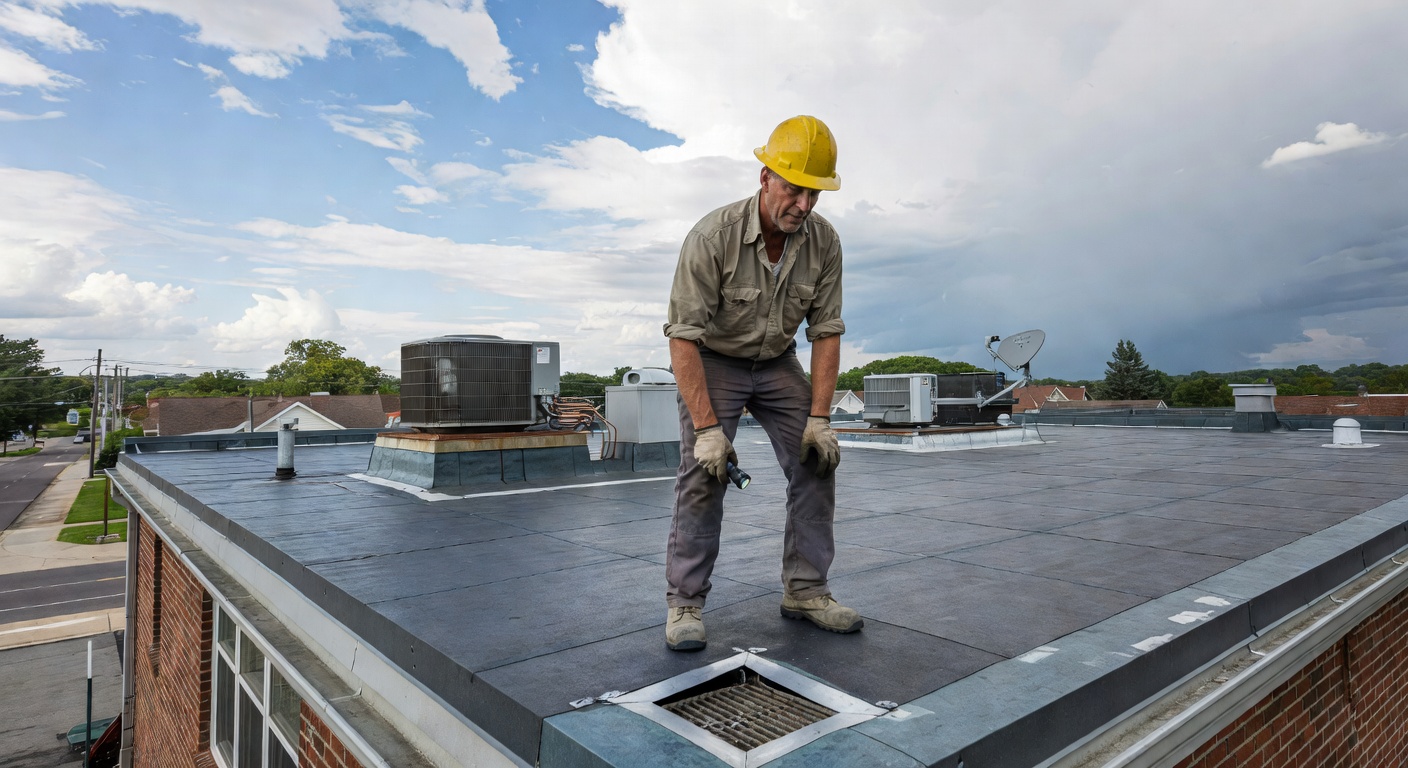
We also look for problems around roof edges, vents, valleys, and flashing because those areas are easier for water to get through. After a spring storm, the roof may still hold up for a short time, but hidden weak spots can let moisture seep in slowly. That is why a careful check matters just as much as the repair itself.
storm damage restoration steps for spring
🌧️ Step 1: Check for obvious storm impact
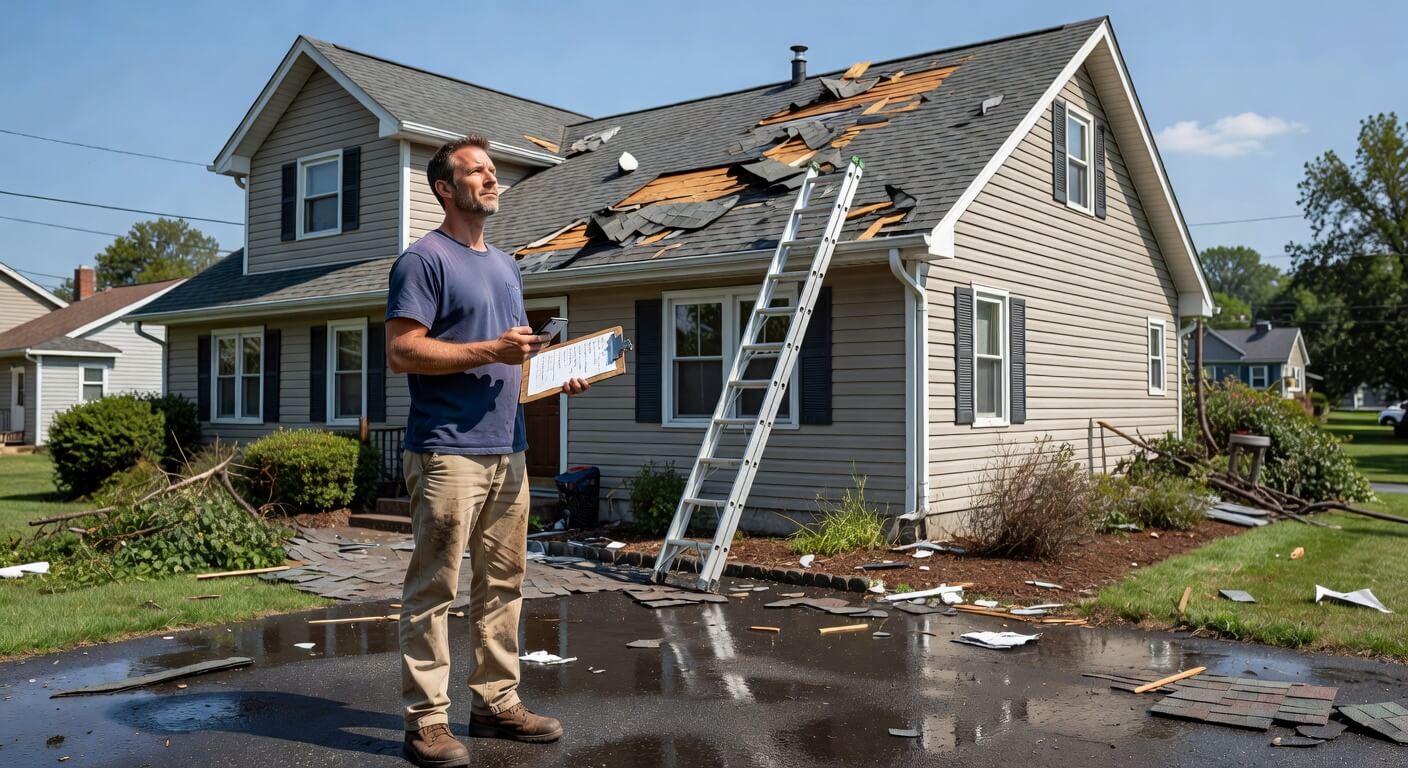
Start by looking for clear signs of damage from the ground and around the property. Missing shingles, fallen branches, and debris near the home can point to roof trouble after a spring storm. This first look helps you spot urgent issues before water has time to move inside.
🔍 Step 2: Inspect the roof surface carefully
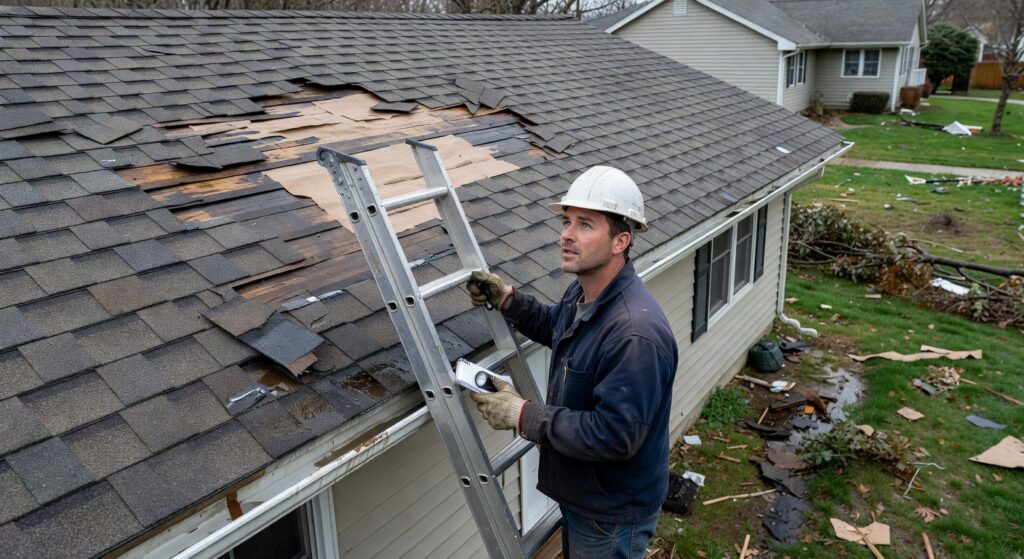
Look for lifted shingles, torn areas, dents, and damaged flashing. These signs often show that wind or hail affected the roof even if there is no active leak yet. A careful inspection helps catch problems early and keeps small issues from turning into larger ones.
🧰 Step 3: Check the attic and ceilings for leaks
Go inside and look for water stains, damp insulation, or a musty smell. These are common clues that moisture has already found a path through the roof. Finding indoor signs early can help limit further damage to the structure and interior finishes.
📸 Step 4: Document the damage
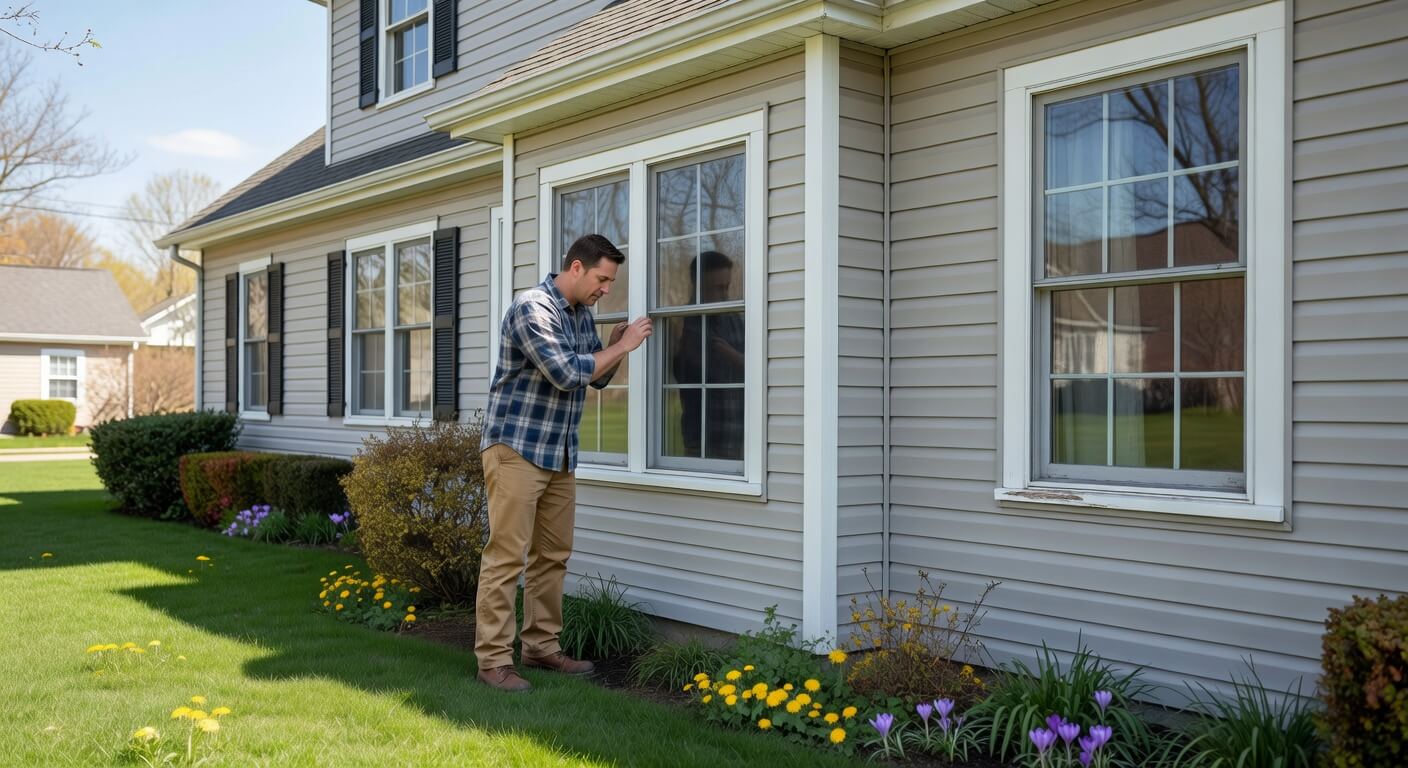
Take clear photos of all visible damage, including the roof, gutters, siding, and any indoor signs. This record helps show what changed after the storm and keeps the process organized. Good documentation also makes it easier to explain the problem clearly when moving forward with repairs.
📞 Step 5: Arrange a professional roof inspection
A trained roofer can find damage that is easy to miss from the ground. We know where spring storm issues usually hide, especially around flashing, vents, and edges. A proper inspection helps confirm what needs repair and what can wait.
🛠️ Step 6: Make temporary protection if needed
If there is an active leak or exposed area, temporary protection can help reduce water entry. This step is important because spring rain can return quickly and make the problem worse. Fast protection buys time until full repairs can be completed.
🏠 Step 7: Repair damaged roofing materials
Replace broken shingles, fix flashing, and address any weak spots found during the inspection. These repairs restore the roof’s ability to shed water and stand up to more spring weather. When repairs are done correctly, the roof is better prepared for the next storm.
✅ Step 8: Finish with a final check
After repairs are complete, review the roof again to make sure everything is sealed and secure. This final step helps confirm that the storm damage restoration work addressed the problem fully. It also gives peace of mind before the season brings more rain.
Common DIY Mistakes to Avoid
Storm damage can look simple from the ground, but it is easy to miss important details. Many homeowners try to handle the problem quickly and end up overlooking signs that point to deeper trouble. The mistakes below are common because spring weather creates a sense of urgency, but a rushed approach can make repairs harder later.
A careful process helps prevent extra damage and keeps the roof safer over time. By understanding what not to do, homeowners can avoid the most common setbacks during storm recovery. These mistakes are often preventable with a slower, more organized approach.
– ⚠️ Mistake 1: Only checking from the ground
This happens when homeowners assume they can spot all damage without getting a closer look. It often leads to missed issues on flashing, vents, or lifted shingles, which can let water in later. To prevent this, inspect the roof closely and look inside the attic for signs of moisture.
– ❌ Mistake 2: Ignoring small signs of damage
This mistake usually happens because minor issues seem harmless at first. A small tear or loose shingle can still create a leak after the next spring rain. To avoid this, treat every visible change as a warning sign and address it quickly.
– 🚫 Mistake 3: Skipping photo documentation
Homeowners often forget to record damage because they want to move straight to repairs. Without photos, it can be harder to track what changed after the storm and what needs attention. Prevent this by taking clear pictures before any cleanup or repair work begins.
– ⚠️ Mistake 4: Using temporary fixes for too long
This usually happens when people apply a short-term patch and assume it is enough. Temporary protection can help for a short time, but it is not a full solution for storm damage. Prevent this by treating emergency protection as a bridge to proper repairs, not the final step.
– ❌ Mistake 5: Delaying professional inspection
This mistake often comes from hoping the roof will dry out and stay stable on its own. Hidden damage can grow worse with each rain, especially during spring weather in Bensalem. To prevent this, schedule a professional inspection as soon as possible after the storm.
Frequently Asked Questions
What should I do first after spring storm damage?
Yes, the first step is to check for visible damage and any signs of leaks inside the home. This helps you spot urgent issues before water causes more harm. A fast response is a key part of storm damage restoration steps for spring.
How do I know if my roof has hidden storm damage?
Yes, hidden damage often shows up as lifted shingles, small leaks, water stains, or damaged flashing. You may not see these problems from the ground, which is why a close inspection matters. Spring storm damage can stay out of sight until the next heavy rain.
Can small roof damage wait until later?
No, small roof damage should not be ignored for long. Even a minor opening can let in water and create bigger repair needs after another storm. Fast attention is the safest move when spring weather is still active.
Do I need photos of the damage?
Yes, photos are very helpful because they show what the roof looked like right after the storm. This makes it easier to track damage and explain the problem clearly. Clear images are a smart part of any storm damage restoration steps for spring plan.
Why is spring a risky season for roof damage?
Yes, spring can be risky because weather can change quickly and bring wind, rain, and debris. Those conditions can worsen weak spots that were already on the roof. That is why spring is a good time to inspect and repair storm damage quickly.
Moving Forward With Confidence
Spring storm damage can seem minor at first, but small issues often turn into bigger repairs when rain keeps coming. A careful inspection, quick documentation, and timely repair work can help protect the home and reduce long-term stress. By following the right storm damage restoration steps for spring, we can keep the roof ready for the rest of the season.
At Robison Roofing Services, Inc., we know how important fast, steady action is after a storm hits Bensalem. If you want to stay connected and see what we are up to, follow us on social media.