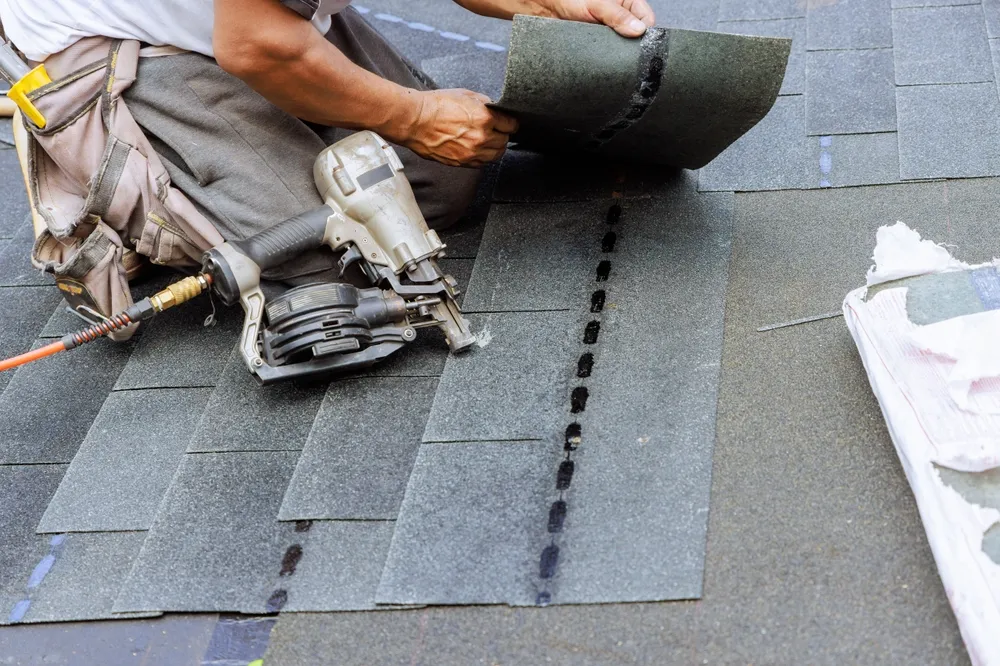
Decking, also referred to as roof sheathing, is the flat panel material — typically plywood or oriented strand board (OSB) — that forms the structural base layer of your roof. It sits on top of the rafters and provides the surface to which underlayment and shingles are fastened. When decking becomes damaged by moisture or rot, it must be replaced before any new roofing material is installed, as compromised decking can undermine the entire roof structure.
Underlayment is a water-resistant or waterproof barrier material installed directly onto the roof decking, beneath the visible outer roofing material such as shingles or tiles. It serves as a secondary line of defense against rain, wind-driven moisture, and ice damming. During a residential roof repair, damaged or deteriorated underlayment is often replaced to ensure the roofing system maintains its full protective capacity.
Flashing refers to thin strips or sheets of metal — commonly galvanized steel, aluminum, or copper — installed at roof joints, valleys, and transitions where the roof meets vertical surfaces such as chimneys, skylights, or walls. Flashing prevents water from seeping into these vulnerable intersections. Improperly installed or corroded flashing is one of the most common causes of roof leaks and typically requires prompt repair or full replacement to prevent interior water damage.
An ice dam is a ridge of ice that forms at the edge of a roof, typically during winter months, preventing melting snow from draining properly. As water backs up behind the dam, it can seep beneath shingles and into the home, causing ceiling stains, insulation damage, and structural deterioration. Ice dams are especially prevalent in climates with repeated freeze-thaw cycles, such as Philadelphia winters, and addressing poor attic ventilation is key to preventing their formation.
A drip edge is a metal flashing component installed along the outer edges of a roof to direct water away from the fascia and into the gutters. Without a properly functioning drip edge, water can run behind gutters, saturate the fascia board, and cause wood rot or structural damage over time. During residential roof repair, inspecting and replacing the drip edge is a critical step often overlooked by less thorough contractors.
A roof valley is the internal angle formed where two sloping roof planes meet, creating a channel through which rainwater flows down toward the gutters. Because valleys concentrate water flow, they are particularly vulnerable to leaks and wear. Valley flashing or specially layered shingles are used to reinforce this area, and damage to the valley is one of the leading causes of persistent roof leaks that require professional repair.
Granule loss refers to the shedding of the small, sand-like mineral particles embedded in the surface of asphalt shingles. These granules protect shingles from UV radiation, weathering, and physical impact. Over time — especially after severe weather events or as shingles age — granule loss accelerates, leaving shingles exposed and vulnerable to cracking, curling, and water infiltration. Noticing granules accumulating in gutters or downspouts is often an early warning sign that a roof repair or replacement may be needed.
A soffit vent is an intake ventilation component located on the underside of the roof overhang. It works in conjunction with ridge vents or attic exhaust vents to create continuous airflow through the attic space. Proper ventilation regulates temperature and moisture levels, reducing the risk of heat buildup in summer and condensation in winter. When soffit vents are blocked or damaged, attic moisture can accelerate the deterioration of decking and roofing materials, increasing the need for premature repairs.