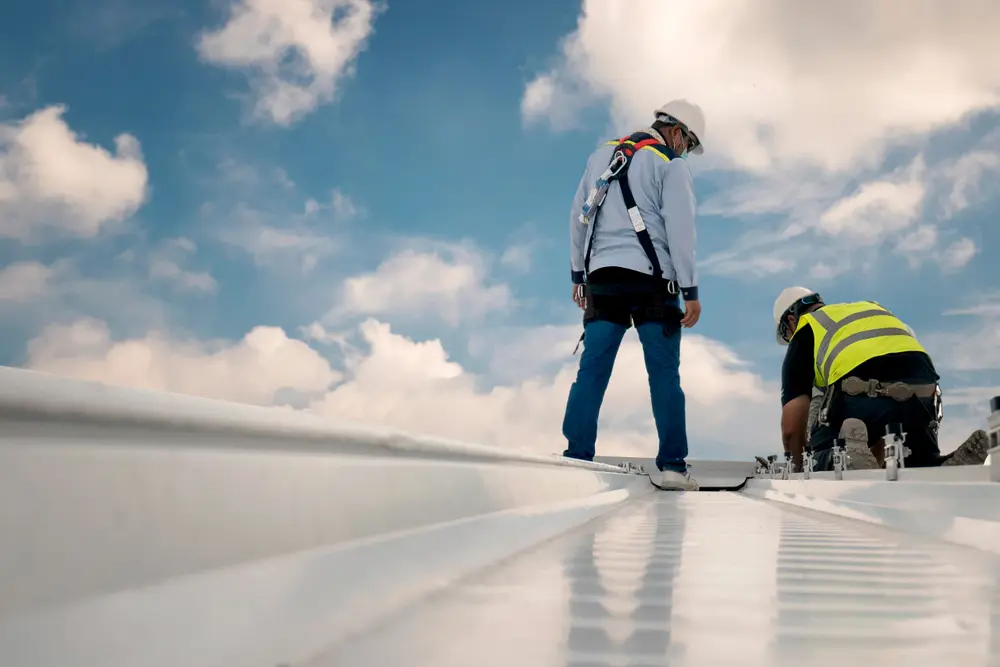
The substrate is the structural surface beneath your roofing system — typically a deck made of concrete, metal, or wood — upon which all roofing materials are installed. During a commercial roof replacement, the condition of the substrate is carefully evaluated before new materials are applied. A compromised or deteriorated substrate must be repaired or replaced first, as it directly affects the performance, longevity, and warranty eligibility of the new roofing system above it.
TPO is a single-ply roofing membrane widely used in commercial roof replacement projects due to its durability, energy efficiency, and resistance to UV radiation, ozone, and chemical exposure. It is heat-welded at the seams, creating a strong, watertight bond across flat or low-slope roofs. TPO membranes reflect sunlight, helping reduce cooling costs in commercial buildings — making them a popular and cost-effective choice for large-scale roofing applications.
Membrane roofing refers to a category of roofing systems made from flexible, continuous sheets of synthetic material designed to create a seamless, waterproof barrier over flat or low-slope commercial roofs. Common types include TPO, EPDM, and PVC. During a commercial roof replacement, selecting the right membrane depends on the building’s climate exposure, structural load capacity, and energy efficiency goals.
EPDM is a highly durable rubber roofing membrane commonly used in commercial roof replacement for flat or low-sloped buildings. Known for its exceptional resistance to temperature extremes, UV exposure, and weathering, EPDM roofing systems can last 25 to 30 years with proper maintenance. The material is available in both black and white variants and can be mechanically fastened, fully adhered, or ballasted, offering flexible installation options for varied commercial structures.
The roof deck is the foundational layer of a commercial roofing system — the structural panel or surface attached to the building’s framing that supports all roofing components above it. During a commercial roof replacement, inspecting the deck for moisture damage, rot, or structural weakness is a critical first step. Any compromised sections must be repaired before new insulation and roofing materials are installed to ensure the integrity of the entire system.
Flashing refers to thin strips or sheets of metal — typically aluminum, galvanized steel, or copper — installed at critical transition points on a commercial roof, such as around HVAC units, skylights, vents, chimneys, and roof edges. Its primary purpose is to seal joints and prevent water infiltration at these vulnerable intersections. Proper flashing installation is one of the most important components of any commercial roof replacement, as failed or improperly installed flashing is a leading cause of commercial roof leaks.
Roof insulation, also referred to as a thermal barrier, is the layer of insulating material installed between the roof deck and the outer membrane in a commercial roofing system. It regulates indoor temperatures, reduces energy consumption, and helps prevent condensation buildup within the building structure. During a commercial roof replacement, upgrading insulation is often recommended to meet current building energy codes and to enhance the overall performance and efficiency of the new roofing system.
A tear-off is the process of completely removing all existing roofing materials — including membranes, insulation, and sometimes the decking — down to the bare structural surface before installing a new roofing system. In commercial roof replacement, a full tear-off is often preferred over a roof overlay because it allows contractors to inspect the substrate for hidden damage, ensure proper installation of new materials, and avoid voiding manufacturer warranties that typically require a clean surface installation.